

Bank Statement for the F-1 Visa: What International Students Need to Know
Are you applying to a U.S. college or university and have been asked to provide a bank statement? This is one of the most common financial documents required from international students during the admission, I-20, and F-1 visa process.
In this guide, we explain what a bank statement is, why American universities request it, how it connects to the Form I-20, and what student-athletes with scholarships usually need to show.
Topics covered: bank statement for F-1 visa, proof of funds for I-20, U.S. student visa financial documents, international student bank statement, athletic scholarship and I-20.
What Is a Bank Statement?
A bank statement is an official financial document issued by a bank. It shows how much money is available in a bank account at a specific point in time.
For international students, a bank statement is usually used to prove that the student or their sponsor has enough funds to cover the cost of studying and living in the United States for at least one academic year.
Your sponsor can be a parent, family member, family friend, or another person who is willing to financially support your education in the U.S.
Important: The bank statement does not mean the money will be taken, withdrawn, or frozen. It is used as financial proof during the university and visa process.
Why Do U.S. Colleges Ask for a Bank Statement?
Once you are admitted to a U.S. college or university, the school’s international admissions office usually needs financial documentation before issuing your Form I-20.
The Form I-20 is the official document that confirms you are eligible to apply for an F-1 student visa. Without the I-20, you cannot complete the F-1 visa process.
The university asks for proof of funds to make sure you have the financial ability to pay for tuition, housing, meals, books, insurance, and other estimated expenses while studying in the United States.
What Is the Form I-20?
The Form I-20, also called the “Certificate of Eligibility for Nonimmigrant Student Status,” is issued by a SEVP-approved school after you are admitted and after you provide the required financial documentation.
After receiving your I-20, you can pay the SEVIS I-901 fee and apply for your F-1 student visa at a U.S. Embassy or Consulate.
Simple explanation: The bank statement helps the university issue your I-20. The I-20 helps you apply for the F-1 visa.
Who Can Provide the Bank Statement?
The bank statement does not always need to be in the student’s name. In many cases, it can be provided by a sponsor.
Common sponsors include:
- A parent or legal guardian
- A grandparent or relative
- A family friend
- A private sponsor
- A company, organization, or government sponsor
If the bank statement belongs to a sponsor, the university may also ask for a sponsor letter or affidavit confirming that the sponsor is willing to support your studies.
What Type of Financial Document Can You Provide?
Most universities accept a regular bank statement from a checking or savings account. You can usually request this document directly from your bank branch or download it from your online banking portal.
In some cases, your bank may also issue a bank certificate or official bank letter confirming that the required amount is available in the account.
Commonly accepted financial documents may include:
- Official bank statement
- Bank certificate or bank letter
- Sponsor letter
- Scholarship award letter
- Government or organization sponsorship letter
- Approved education loan letter, if accepted by the university
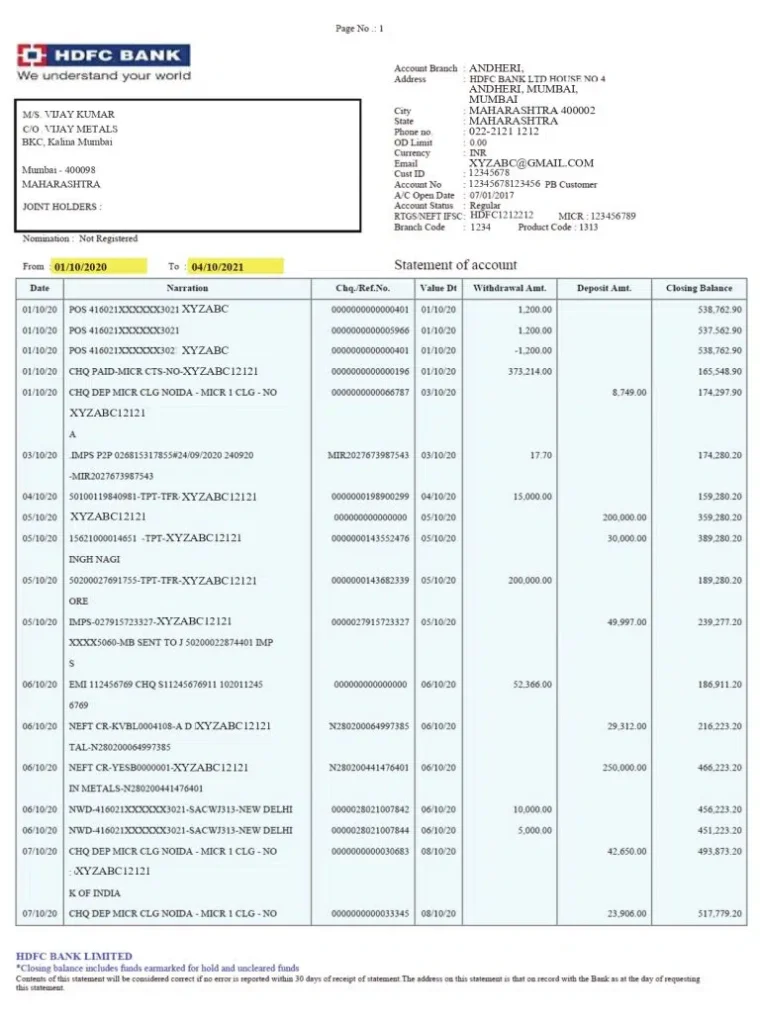
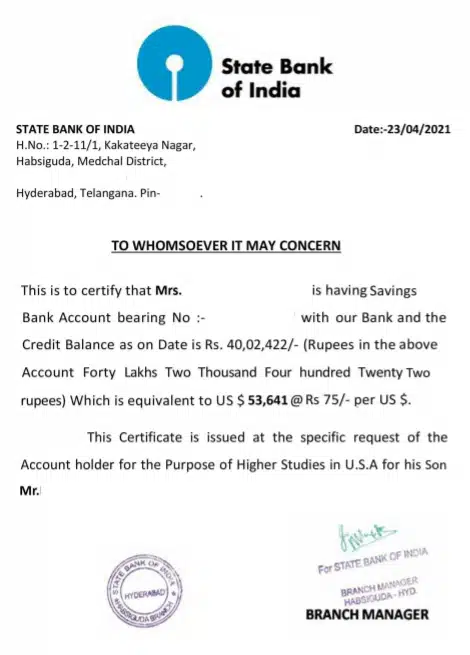
What Information Should the Bank Statement Include?
Requirements can vary by university, but a strong bank statement or bank certificate should usually include the following information:
- Name of the account holder
- Name and logo of the bank
- Date of issue
- Available balance
- Currency of the account
- Bank stamp, signature, or official formatting, if available
- English translation, if the document is not already in English
Tip: Always follow the exact instructions from the university. Some schools may require documents to be in English, converted to U.S. dollars, signed by the bank, or issued within a specific number of months.
How Recent Does the Bank Statement Need to Be?
Many universities require the bank statement or bank certificate to be issued within the twelve months before the start of your first semester.
For example, if your semester starts on August 20, 2026, the bank statement should generally be dated after August 21, 2025.
However, the more recent the document is, the better. Some universities may ask for a document issued within the last three or six months, so you should always check the specific instructions from your school.
How Much Money Do You Need to Show?
The amount you need to show depends on the university’s estimated cost of attendance. This usually includes tuition, fees, housing, meals, health insurance, books, and personal expenses.
The university will usually tell you the exact amount required before issuing the I-20.
Example
If the total cost of attendance is $45,000 for one academic year, the bank statement may need to show at least $45,000, unless you have a scholarship or other financial aid.
What If You Have an Athletic Scholarship?
If you received an athletic scholarship, academic scholarship, or other university award, you usually only need to show the remaining amount that is not covered by the scholarship.
Scholarship Example
If the total cost of attendance is $40,000 and your scholarship covers $25,000, your bank statement may only need to show the remaining $15,000.
In simple terms, the bank statement should normally cover the difference between the total cost of the university and the amount covered by your scholarship.
This is especially important for international student-athletes because scholarship amounts can vary depending on the sport, division, university, and coach’s budget.
Will the Money Be Used or Withdrawn?
No. The money shown on the bank statement is not automatically used, withdrawn, or transferred to the university.
The purpose of the document is to prove that you or your sponsor have enough financial resources to support your studies in the United States.
That being said, showing stronger financial support can help avoid problems or delays during the I-20 and visa process.
Do You Need the Bank Statement for the Visa Interview?
Yes, it is recommended to bring your financial documents to the F-1 visa interview. The consular officer may ask to see proof that you can afford your studies in the United States.
You should bring the same type of financial documents used for your I-20, including your bank statement, sponsor letter, and scholarship letter if applicable.
Bank Statement Checklist for International Students
Before submitting your bank statement to the university, review this checklist:
- The document is clear and easy to read
- The account holder’s name is visible
- The available balance is visible
- The date of issue is recent enough
- The bank name is clearly shown
- The currency is listed
- The amount meets or exceeds the university’s requirement
- The document is translated into English, if needed
- You included a sponsor letter, if the account is not in your name
- You included your scholarship letter, if you received financial aid
Common Mistakes to Avoid
Many students delay their I-20 or visa process because they submit financial documents that are incomplete or not accepted by the university.
Avoid these common mistakes:
- Submitting a screenshot from a banking app instead of an official bank document
- Providing a document that is too old
- Submitting a bank statement without the account holder’s name
- Showing less money than the amount required by the university
- Forgetting to include a sponsor letter
- Submitting a document that is not translated into English when required
- Assuming the scholarship covers everything without checking the remaining balance
Official U.S. Government Resources
For more information, you can review the official U.S. government resources about financial ability, Form I-20, and student visas:
- Study in the States: Financial Ability
- Study in the States: Students and the Form I-20
- U.S. Department of State: Student Visa
Final Thoughts
The bank statement is an important part of the process for international students who want to study in the United States.
It helps the university confirm your financial ability, issue your Form I-20, and support your F-1 visa application. The document does not mean the money will be taken from your account. It simply proves that you or your sponsor have the financial resources to support your studies in the U.S.
If you are a student-athlete with a scholarship, make sure you understand the total cost of attendance, the amount covered by your scholarship, and the remaining amount you need to show through your bank statement.
Frequently Asked Questions About Bank Statements for the F-1 Visa
Do I need a bank statement to get an I-20?
In most cases, yes. U.S. colleges and universities usually require financial documentation before issuing the Form I-20.
Can my parents provide the bank statement?
Yes. A parent can usually act as your financial sponsor. The university may also ask for a sponsor letter confirming that your parent will financially support your studies.
Does the bank statement need to be in English?
Many universities require financial documents to be in English. If your bank statement is not in English, you may need to provide a certified translation.
Does the money need to be in U.S. dollars?
Not always. Some universities accept bank statements in foreign currency, but they may ask for a currency conversion or may calculate the U.S. dollar equivalent themselves.
Will the university take the money from the bank account?
No. The bank statement is used as proof of financial ability. The money is not automatically withdrawn or transferred.
What if I have a scholarship?
If you have a scholarship, you usually need to show enough funds to cover the remaining cost after the scholarship is applied.
Can I use more than one bank statement?
Many universities allow students to combine multiple financial documents, especially if funds are coming from more than one sponsor. Always check with your university first.
Create Your Free USA College Sport Account
Are you an international student-athlete interested in studying and competing in the United States?
Create your free USA College Sport account and start your journey toward a U.S. college opportunity.
Create Free Account